 Português
 English
We are asked this almost every day: is it worth paying for timber windows, or is PVC the sensible choice? The honest answer is that there is no absolute winner. There is a right material for your project, your budget and the character of your house. Here are the numbers, and the trends shaping the Portuguese market in 2025-2026.
PVC leads on insulation per euro spent and on near-zero maintenance. Timber is growing in the premium segment and in renovation work, where looks, resale value and sustainability outweigh the initial price.
What changed in the market
Rising energy costs and efficiency incentives turned the window from a cosmetic expense into an investment decision. In 2025-2026 the Portuguese buyer asks about thermal and acoustic performance first, and about colour and material second.
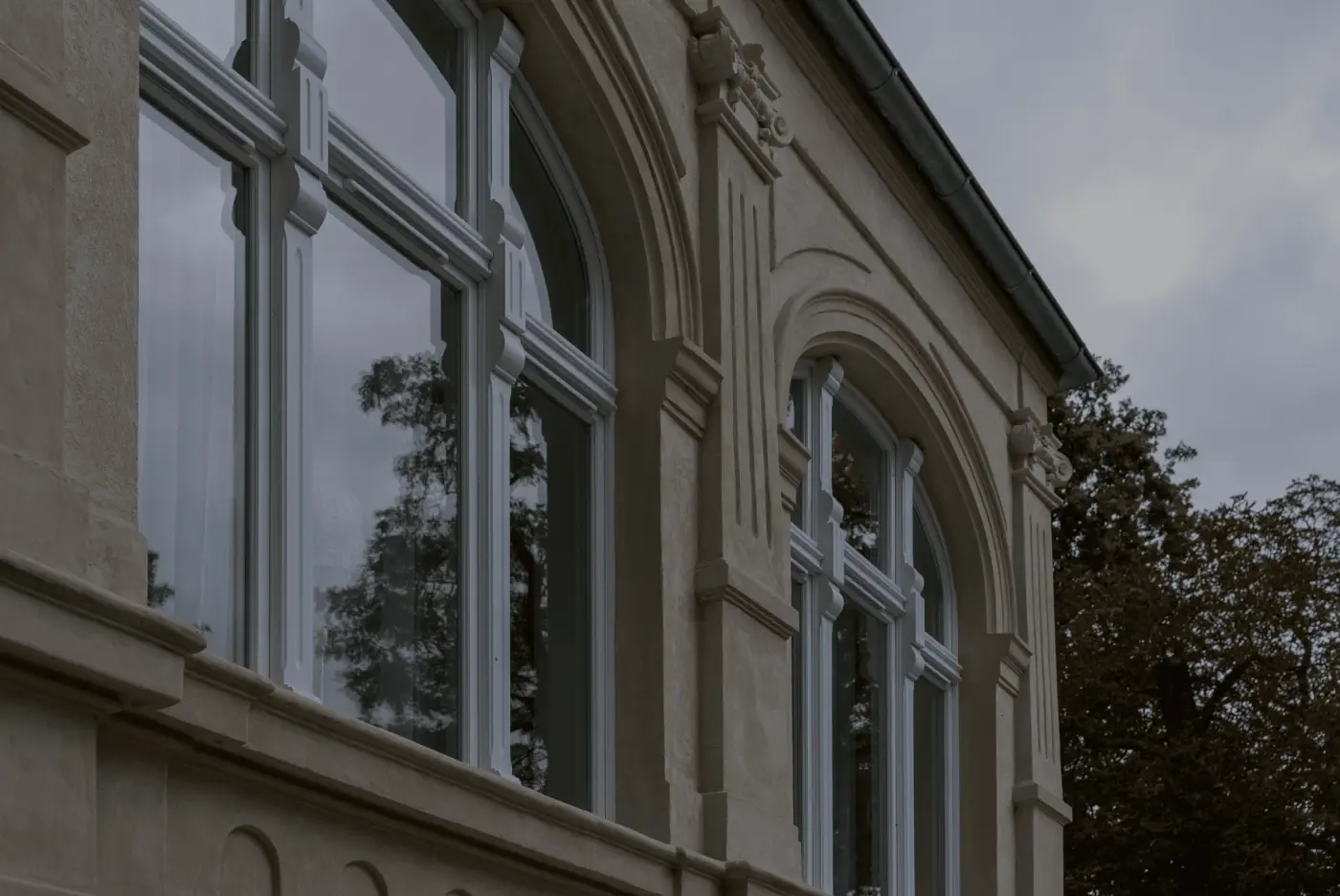
At the same time, urban renovation in Lisbon and Porto brought demand for timber back. In buildings with character, both the regulations and good taste call for frames faithful to the original.
Head to head
The table below covers the essentials. Note that we are comparing products of equivalent quality: a cheap timber window against a premium PVC one tells a very different story.
| Criterion | Advantage |
|---|---|
| Insulation per euro | PVC |
| Looks and resale value | Timber |
| Maintenance | PVC |
| Sustainability | Timber |
| Period renovation | Timber |
| Initial cost | PVC |
Energy efficiency
Both materials now reach excellent insulation figures. A six-chamber PVC profile gets to Uw ≈ 0.9 W/m²·K; an 80 mm timber window with triple glazing goes down to Uw ≈ 0.8 W/m²·K. In practice the thermal gap between good PVC and good timber is small. What decides the outcome is the glass, the spacer and the installation.
Durability and maintenance
Quality PVC lasts 30 to 40 years without painting; cleaning is enough. Modern timber, protected in four coats, lasts just as many decades but asks for the finish to be refreshed every 8 to 12 years. Timber's advantage is that it can be repaired almost indefinitely. PVC's advantage is that it asks for almost nothing.
How to decide
Choose according to your priority:
- Budget and maximum efficiency per euro → PVC.
- Renovation, character and resale value → timber.
- Very large openings and minimal sightlines → consider aluminium as well.
If you are unsure, ask us. We look at solar orientation, noise and the style of your house before recommending anything.