 Português
 English
Say “timber windows” and many people picture frames that warped, let the draught through and needed painting every other summer. Forget that. Timber built for demanding projects today is an engineered product: stable, insulating and made to last decades without losing its natural beauty.
The difference comes down to three choices: laminated rather than solid timber, high-performance glazing with a warm-edge spacer, and European hardware. Getting these three right is what separates a window with character from a headache.
Why laminated, not solid
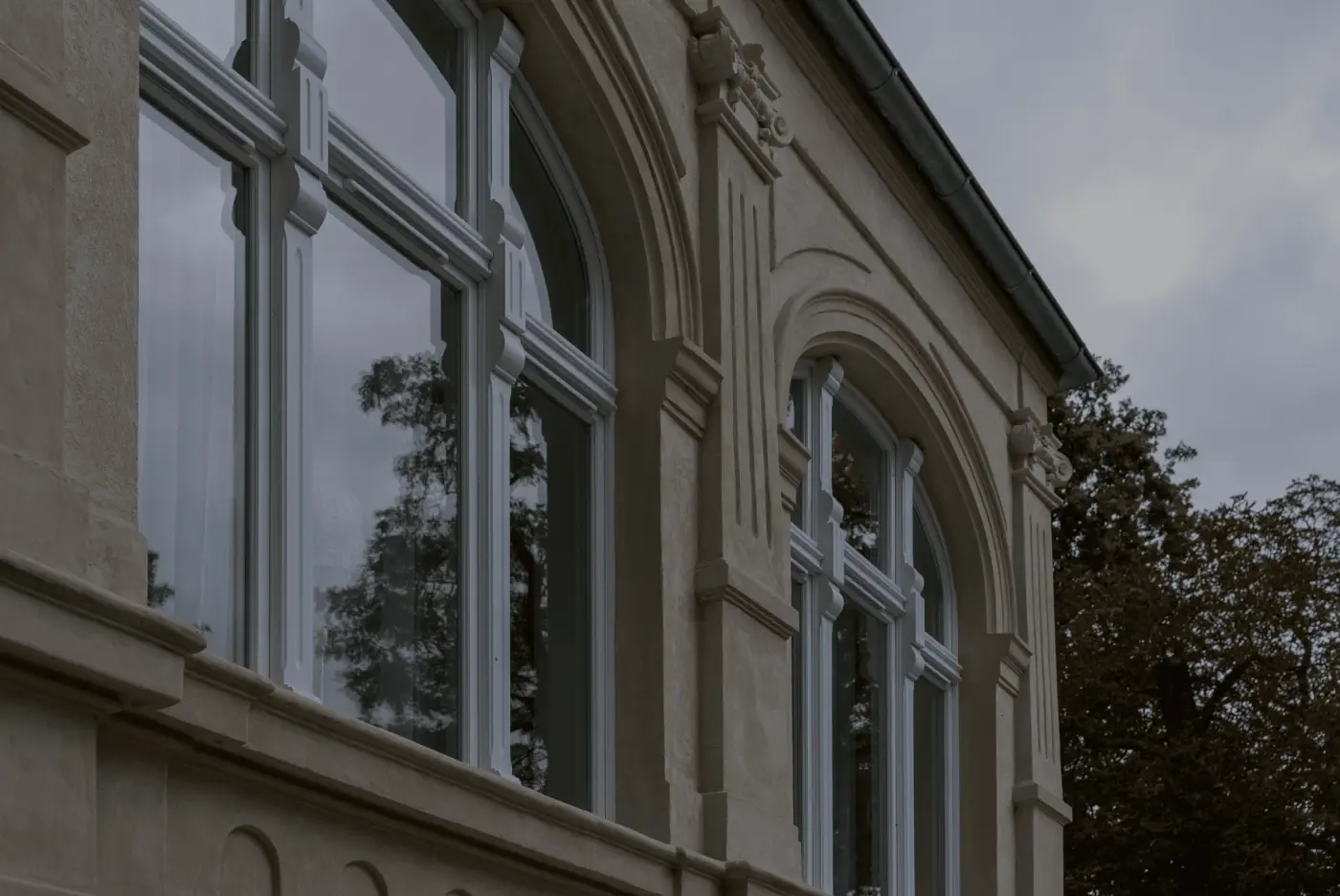
Laminated timber bonds three or four layers with the grain crossed. The result is a far more stable component that will not warp with humidity or heat, which matters in Portugal, between the Alentejo sun and the salt of the coast. It also allows arched and round shapes that are impossible in solid timber.
The glass does half the work
We work with high-performance Saint-Gobain glazing: solar control, low emissivity and acoustic laminates. Combined with the Swisspacer Ultimate warm-edge spacer (Ψ ≈ 0.03 W/m·K), they cut condensation at the edge of the glass and bring down the Uw of the whole window.
Hardware that lasts as long as the window
A good window with weak hardware is no good to anyone. We use Roto and GU tilt-and-turn systems with multipoint locking and fine adjustment. Hardware is what keeps a window airtight and watertight year after year, and what makes it pleasant to use every day.
Finishes and colour
Four-coat protection resists moisture and UV. You can choose any RAL or NCS colour, clear varnishes that let the grain show, or an aluminium cladding on the outside — timber inside, aluminium outside, the best of both worlds for heavily exposed façades.